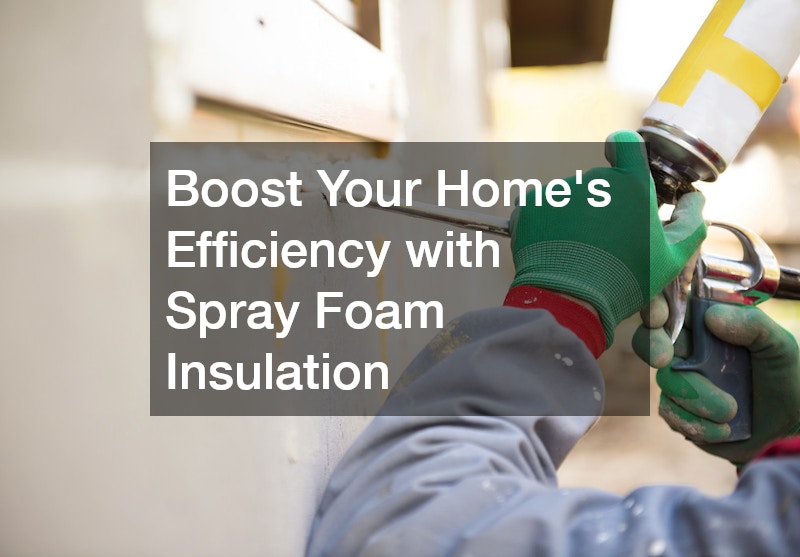
Discover how spray foam insulation can enhance your home’s efficiency. It offers benefits from energy savings to improved indoor air quality, creating a more comfortable and cost-effective living environment. It also helps in reducing noise pollution by acting as a sound barrier, thus contributing to a quieter home.
1. What is Spray Foam Insulation?
1.1 Understanding the Basics
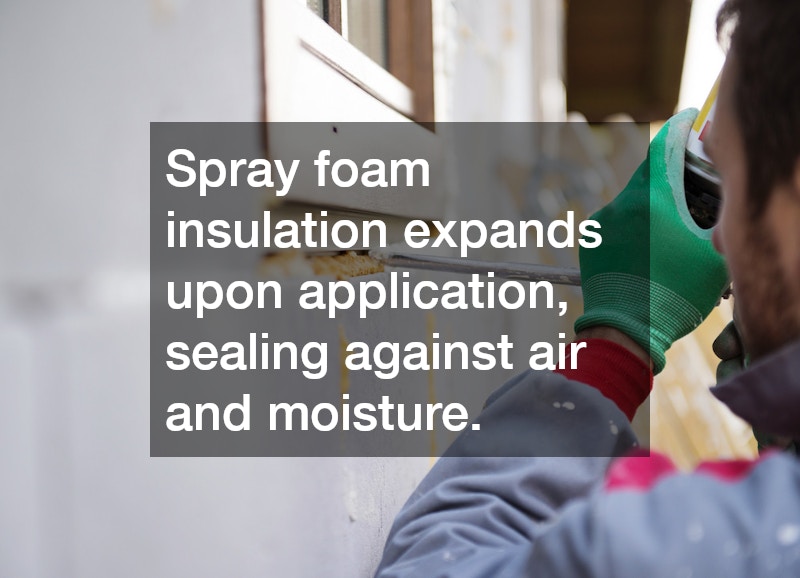
Spray foam insulation expands upon application, sealing against air and moisture. It consists of isocyanate and polyol resin, reacting to create foam that adheres to surfaces, offering superior thermal resistance compared to traditional insulation. It fills in gaps and cracks, preventing heat transfer and maintaining indoor temperatures. It does not sag or settle, providing lasting performance and reducing heating and cooling needs.
Application is swift due to its expansion, quickly drying and hardening for durability. It reduces energy bills, offering a quick return on investment, making it popular for new builds or upgrades.
1.2 Types of Spray Foam Insulation
There are two types: open-cell and closed-cell foam. Open-cell is lighter, less dense, optimal for acoustics, and more affordable. Closed-cell is denser, offers structural reinforcement, and is moisture-resistant, ideal for outdoor or basement applications.
Choosing between them depends on project needs, such as soundproofing for open-cell or moisture barrier for closed-cell. Consulting with an expert ensures the right choice, influencing cost-effectiveness and efficiency.
1.3 How Spray Foam Insulation Works
Spray foam expands to fill voids, forming a continuous barrier that reduces drafts and moisture infiltration. Closed-cell foam has an R-value of about 6.5 per inch, providing superior insulation crucial for energy conservation.
Careful handling during application is needed due to its expansion. This ability to cover intricate spaces makes spray foam attractive for complex designs. It also aids in soundproofing and lowers heating and cooling costs, aligning with sustainable practices by reducing carbon footprints.
1.4 Comparing with Traditional Insulation
Spray foam offers a custom-fit solution, mitigating air leaks better than traditional methods. It does not settle over time, providing long-term efficiency and minimizing installation errors.
Despite a higher initial cost, durability and energy savings can offset these expenses over time, making it a financially sound choice.
2. What are the Benefits of Spray Foam Insulation?
2.1 Energy Efficiency
Spray foam insulation seals gaps, addressing energy loss, often improving energy efficiency by up to 50%, reducing utility bills. It maintains indoor temperatures, reducing HVAC workloads and extending their lifespan, contributing to sustainability and property value.
2.2 Improved Air Quality
It improves air quality by forming a tight seal that prevents pollutants and allergens from entering. Unlike fiberglass, it does not degrade or release fibers, reducing airborne irritants and improving comfort. Moreover, its durable structure ensures long-lasting protection without compromising airflow efficiency.
2.3 Increased Comfort
Spray foam insulation increases home comfort by reducing drafts and temperature fluctuations, ensuring quiet and stable living spaces. It eliminates hot and cold spots, making all rooms equally usable and pleasant.
2.4 Longevity and Durability
Its longevity and durability make it a reliable investment. It does not deteriorate under extreme temperatures or moisture, maintaining effectiveness and adding structural reinforcement, minimizing maintenance costs.
3. How Much Does Spray Foam Insulation Cost?
3.1 Factors Affecting Cost
Costs vary due to project size, foam type, space accessibility, and building age. Larger, complex areas, and repairs may increase expenses, but long-term energy savings often justify them.
3.2 Cost vs. Savings: Is It Worth It?
Despite higher initial costs, spray foam’s energy retention provides savings that make it a smart investment. Government incentives help offset costs, improving property values and aligning with sustainability goals.
4. How to Install Spray Foam Insulation?
4.1 DIY or Professional Services?
Choosing between DIY and professional installation depends on project complexity. DIY kits suit small-scale projects, while professionals ensure quality and compliance for larger areas.
4.2 Steps Involved in Installation
Installation begins with area preparation, followed by precise foam application for uniform coverage, ensuring energy efficiency and structural integrity. Comprehensive safety checks are conducted to guarantee optimal performance and adherence to industry standards.
Spray foam insulation improves energy efficiency, comfort, and air quality. It’s an essential choice for modern living, fostering sustainability and cost-effectiveness, while contributing to environmental conservation. Additionally, its robust sealing capabilities reduce noise pollution, adding another layer of comfort to your living space.